Deal Navigation
The Other Side of the Cap Table

OBVIOUS
You close the dynasty trust paperwork. The PPLI wrapper is funded. The Freeze LLC is humming. You built the Rockefeller architecture exactly as designed.
A week later, you sit at your daughter's wedding rehearsal dinner. You look across the table at your new son-in-law. He is smart. He is ambitious. He also has absolutely no idea what he just married into. Not the money. The system.
You realize nobody explained the rules. Nobody briefed him on the governance structure, the trust distribution mechanics, or the family constitution. He thinks he married your daughter. He actually married into a multi-generational operating company.
The structure you just built has a 100-year design life. The people inside it have a 30-year average tolerance for being inside it. Something is off-spec.
Founders spend months optimizing the capital architecture. They model the tax drag. They debate the merits of a pooled income fund versus a donor-advised fund. They hire six advisors to build the perfect machine. Then they drop their family into it and expect the machine to run itself.
The dynasty does not fail in court. It fails at dinner tables.
INTERESTING
Every dynasty structure has two layers.
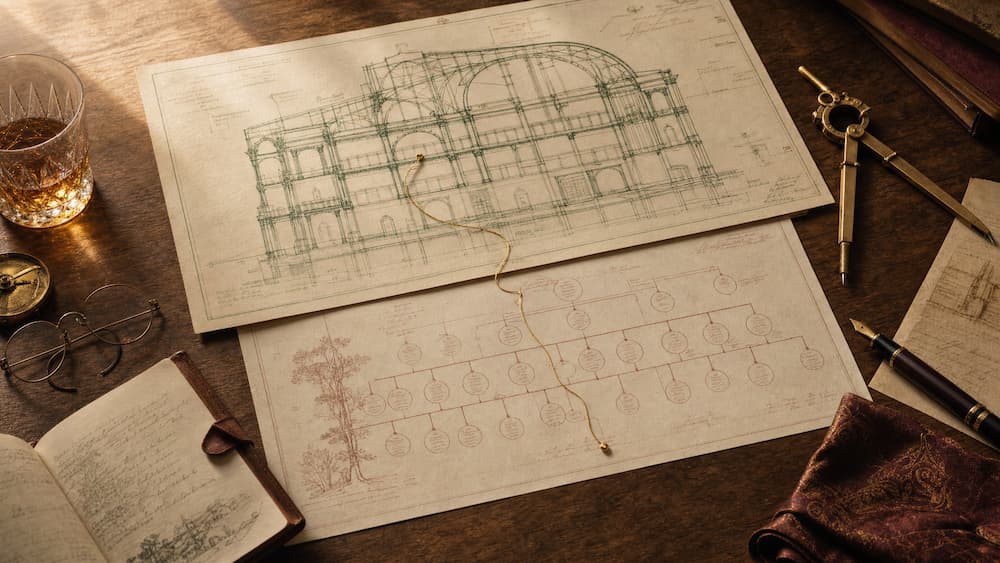
Layer one is the capital architecture. The trust, the LLC, the wrapper, the GP stakes. This is what we covered in Piece 05. It is legible. It has citations and Excel models. It is the hardware.
Layer two is the human architecture. The marriages, the heirs, the in-laws, the key non-family operators. This is the firmware.
Most founders pour all their engineering attention into layer one. They ignore layer two because it requires uncomfortable conversations. But the data shows exactly where the system breaks.
The Geography of Complexity
Campden Wealth research on family office integration challenges.
When a family enterprise combines ownership, governance, operating businesses, and philanthropy into one interconnected system, a spouse is no longer just a spouse. They are structurally a business partner. They hold a seat at the table of a nine-figure entity, whether they signed up for it or not.
Large family systems are beginning to treat human integration as a governance event. They run relationship briefings explaining key family branches and decision makers. They hold introductory meetings with senior family members before major events. They provide background notes covering family history and philanthropic priorities. They offer quiet mentoring to help incoming spouses understand communication dynamics.
They treat the family like an institution.
The dynasty structure is a contract between you and the next ten people you do not yet know. The capital architecture defines the rules. The human architecture defines who can play.
INSIGHTFUL
Run the math out forty years. A founder who builds a $200 million post-tax dynasty trust at age 50, compounding at 14% net, lands at roughly $1 billion by 75. By 90, the number is north of $2.5 billion. By the third generation, that trust supports twelve to twenty descendants and at least that many in-laws.
The Scale of the Human Problem
A $200M trust compounding at 14% net over 40 years, mapped against the growing number of family members it must support.
The capital architecture survives that scale. The question is whether the family does.
You can fix this. You make three concrete moves in the first 24 months post-exit.
First, write the family constitution before you fund the trust. The trust is the legal expression of the family's agreement with itself. If the agreement does not exist on paper before the trust funds, the trust becomes a treasure chest with no map.
Second, build a premarital architecture, not just a prenup. Prenups are litigation hardware. Premarital architecture is governance firmware. It includes introduction protocols, financial literacy onboarding for the incoming spouse, and transparency about what they are marrying into. It establishes a relationship with the family office that exists independent of their partner.
Third, designate a non-family human-systems trustee. This is the structural counterpart to your Chief Investment Officer. Their job is to monitor the firmware. They watch communication patterns, in-law integration, generational handoffs, and key-executive succession. Most family offices have a CIO. Almost none have a CHO.
There is a risk here. Governance can quietly replace love. If you run the system too tight, you produce a family that is administratively coherent and emotionally dead. You optimize for stability and strangle trust. Relationship management begins to look like institutional risk management.
The founders who get this right hold both at once. The structure is the floor, not the ceiling. Love, trust, and shared mission live above it. The structure exists so that when love has a bad week, the family does not vaporize a generation of compounding.
The dynasty trust is not the dynasty. The dynasty is the people the trust serves. Build the trust like an institution. Build the family like a startup. Iterate, communicate, hire carefully, and occasionally fire. The capital architecture is necessary. It is not sufficient. The rest of the work happens in rooms where no advisor is present.
The Dynasty Firmware Audit
A 14-question diagnostic to test the human architecture of your family system.
Request the Audit →